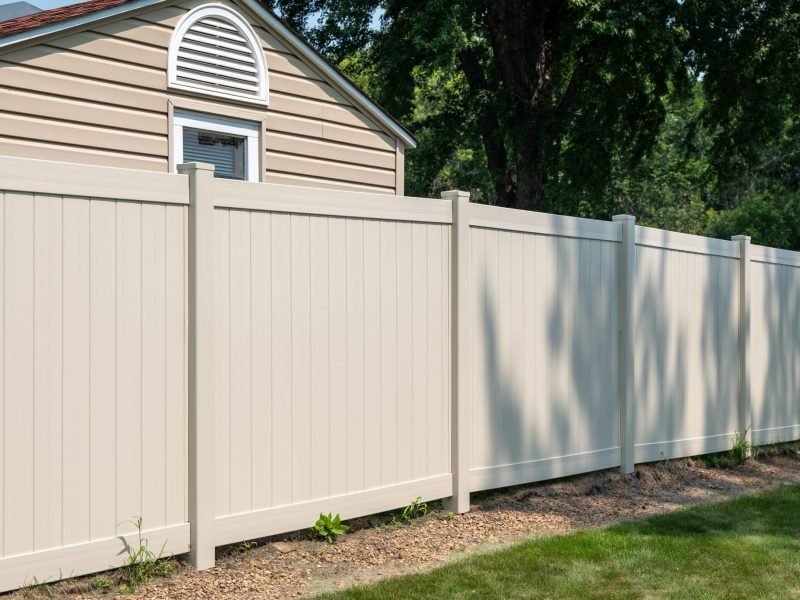
You want a beautiful, low-maintenance vinyl fence that stays strong and straight through Minnesota’s harsh winters. The challenge is that Minnesota’s changing seasons — frost heave, frozen ground, heavy snow, and spring thaw — can cause major problems if installation isn’t done with the local climate in mind. That’s why homeowners in Fridley, MN, and the surrounding areas trust Northland Fence — the local experts who know how to build fences that withstand every season.
The Problem — Why Seasons Matter
Vinyl looks easy, but the ground beneath it does the hard work. If posts aren’t set deep enough or installed with frost and drainage in mind, freeze-thaw cycles can lift, tilt, or loosen them. Timing, hole depth, and how you set posts (concrete, drainage, or driven posts) all change with the season — and with Minnesota’s frost line. In Anoka County (Fridley area), the frost depth is commonly cited as around 3 feet 6 inches, so installations need to account for that.
The Guide — Northland Fence (what we bring)
At Northland Fence, we’ve installed fences across Fridley and surrounding communities for years, and we know the local seasons — and the smart tradeoffs each one brings. We’ll walk you through a clear seasonal plan so your vinyl fences stay level and beautiful for decades.
Simple Seasonal Plan (3 steps you can follow)
1) Pick the best season for your priorities
- Spring / Early Summer — Good for most jobs: soil workable, plants recovering, and quick curing of concrete. Ideal if you want your yard finished before full summer.
- Fall — Often the smartest balance: cooler temperatures (good for concrete curing without extreme heat), less scheduling pressure, and easier grading without summer foliage. Many pros recommend fall installs when possible.
- Winter — Not impossible. If the ground isn’t fully frozen (or if crews use specialized equipment), winter installs can save money and get you on the schedule faster — but expect extra steps and possible small delays if frost complicates digging. Professional crews who work year-round can manage winter jobs safely.
2) Set posts for Minnesota’s frost conditions
A rule of thumb is to bury posts at least one-third of the post height and — in cold climates like ours — below the frost line (typically 3–4 feet depending on exact location). For a 6-foot vinyl privacy fence, that often means digging 30–48 inches, depending on local frost data and soil type. Going deep and anchoring correctly prevents frost heave and keeps panels aligned season after season.
3) Concrete, drainage, and smart details
- Use the right concrete volume and hole diameter for your 4×4 or reinforced vinyl posts; larger gate posts need bigger holes. Allow proper backfill and tamping so water won’t pool around the base.
- Consider drainage solutions (gravel base under concrete, sloped grade away from posts) to prevent standing water that worsens freeze-thaw movement. Some contractors use driven/no-dig systems as an alternative in very cold soils — discuss pros/cons with your installer.
What Could Go Wrong (and how we prevent it)
- Shallow posts = leaning and repair bills. We place posts below the local frost depth and follow manufacturer specs so your warranty and structural integrity stand up to Minnesota winters.
- Poor drainage = repeated movement. We grade and compact to move water away from post bases.
- Wrong season + amateur crew = delays, broken panels, or frozen holes. We advise seasonally appropriate scheduling and bring experience (and sometimes different methods) for winter installs when needed.
The Happy Ending
Imagine a straight, low-maintenance vinyl fence that still looks great after every freeze, thaw, thawed mud in spring, and heavy snow in winter. With the right seasonal plan, local know-how, and correct post depth, that’s exactly the result you get — and it starts with one short conversation with Northland Fence.